
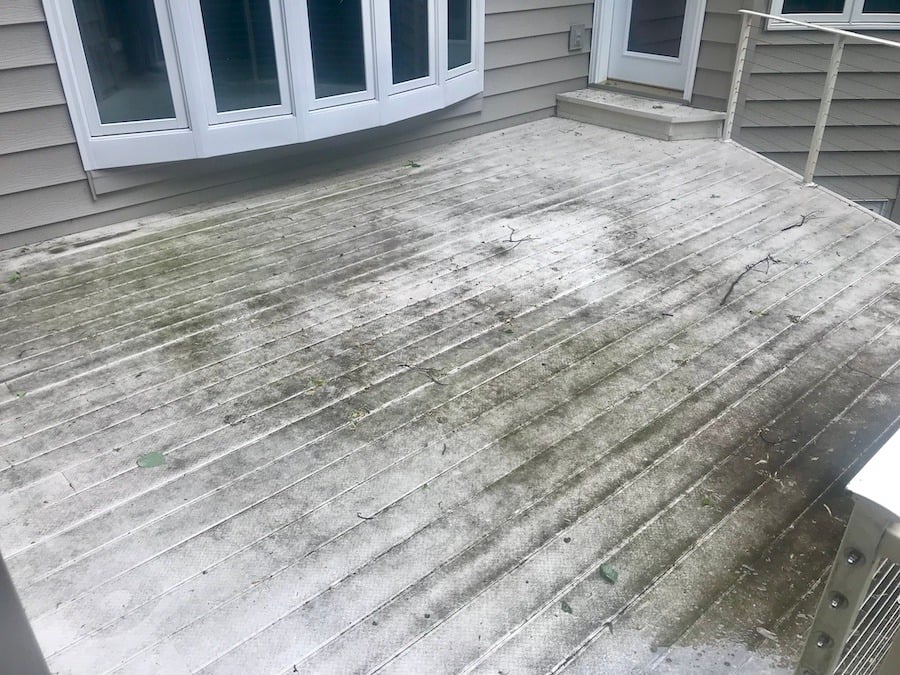
If you own a wood deck in Middle Tennessee, you already know how quickly the climate takes a toll. Between the summer humidity, the heavy spring rains, the UV intensity from June through August, and the freeze-thaw cycles in winter, Tennessee is genuinely one of the harder climates for wood decks in the country. A deck that looks great in May can look grayed out and grimy by July without the right maintenance approach.
Why Tennessee Is Hard on Wood Decks
The combination of high humidity and warm temperatures creates ideal conditions for mold, mildew, and algae to grow on wood surfaces. These biological organisms don't just look bad — they actually eat into the wood fibers, causing breakdown, softening, and splintering over time. Left untreated, what starts as a dark discoloration can progress to soft, punky wood that needs replacing.
UV exposure compounds the problem. Tennessee summers bake wood with intense direct sunlight that breaks down lignin — the natural binding agent that holds wood fibers together. This causes the characteristic graying and checking (small surface cracks) that makes an untreated deck look years older than it is.
The Right Cleaning Approach for Wood Decks
Standard pressure washing is not safe for wood decks. The high pressure raises the wood grain, leaves streak marks, and can force water deep into the wood fibers — accelerating the rot it's supposed to prevent. The correct approach for wood decks is soft washing with an oxygen-based brightener, applied at low pressure, that kills biological growth and opens the wood grain for staining without damaging the surface.
A proper deck cleaning process includes:
- Pre-treatment with an oxygen-based cleaner to kill mold, mildew, and algae
- Dwell time — letting the solution penetrate and break down biological growth
- Low-pressure rinse (under 600 PSI) to avoid raising the grain
- A wood brightener application to restore natural pH and open the grain
- Final rinse and dry time before any stain or sealer is applied
To Stain or Not to Stain?
Staining is optional on a cleaned deck, but it significantly extends the time between cleanings and protects the wood from UV and moisture penetration. A quality semi-transparent stain on a properly cleaned and brightened deck will last two to four years in a Tennessee climate. Without stain, most Middle Tennessee decks need cleaning every one to two years to prevent biological buildup from accelerating wood breakdown.
Maintenance Schedule for Tennessee Decks
Recommended maintenance timeline:
- Annual: visual inspection for soft spots, loose boards, and graying
- Every 1–2 years: professional soft wash cleaning to remove biological growth
- Every 2–4 years: re-stain or re-seal after cleaning and brightening
- Immediately: address any standing water, loose fasteners, or ledger board issues
Catching problems early — before mold has eaten into the wood or before UV damage has deepened past the surface — is always cheaper than replacing boards or the whole deck. A professional cleaning and inspection every one to two years is the most cost-effective way to protect a wood deck investment in Middle Tennessee's climate.
Ready for Knockout Results?
Ready to restore your deck? We serve Mt. Juliet, Nashville, Lebanon, and surrounding areas — get a free estimate today.
Get a Free Quote