If you're in Tennessee, the simple answer is: most concrete should be sealed every 2–3 years. Our humidity, storms, and organic growth make sealing more than a 'nice-to-have' — it's active protection against a climate that is genuinely hard on concrete surfaces.
Why Tennessee's Climate Accelerates Concrete Wear
Middle Tennessee sits in a humid subtropical climate zone — which means long, humid summers perfect for algae and mildew growth, rainy springs that drive red clay across your surfaces, and occasional winter freezes that put freeze/thaw stress on unsealed concrete. That combination wears down protective sealers faster than drier climates, and it means concrete that isn't sealed regularly shows its age quickly.
Unsealed concrete in Tennessee doesn't just look older faster — it actually deteriorates faster. Moisture that penetrates the surface expands slightly when it freezes, contributing to hairline cracks over time. Organic matter that sets into porous concrete feeds further biological growth that is progressively harder to remove each season.
What Impacts Sealer Lifespan?
Factors That Change How Often You Should Reseal:
- Direct sun exposure vs. constant shade — UV breaks down sealers faster in full sun
- Vehicle traffic and turning tires — high-friction areas wear sealers down more quickly
- Tree coverage and organic debris — leaves and pollen feed growth and trap moisture
- Drainage patterns — concrete that holds standing water after rain deteriorates faster
- Previous stain history — oil, rust, and fertilizer stains that weren't cleaned properly affect how sealer bonds
- Type of sealer used — penetrating sealers typically outlast surface-film sealers
Easy Signs It's Time to Reseal
You don't need special tools or a professional inspection to know when resealing is due. The water bead test is the simplest check: pour a small amount of water on your concrete. If it beads up and sits on the surface, your sealer is still active. If it soaks in quickly and darkens the concrete, the protective layer is gone. This test takes less than a minute and is reliable.
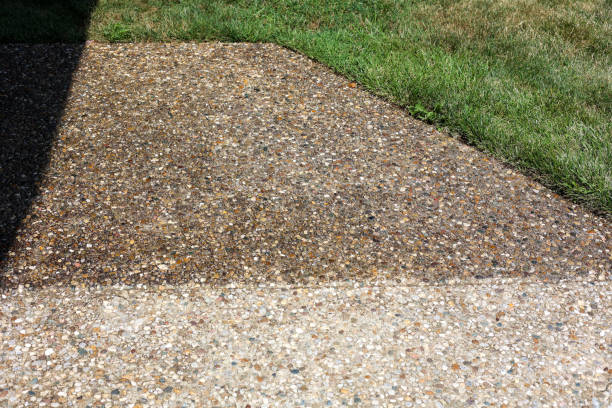
Another clear sign is accelerated staining. If algae comes back within a few months of cleaning, or if the surface darkens noticeably faster than it used to, sealing can dramatically slow that cycle down. You'll also notice that unsealed concrete is harder to clean each time — stains penetrate deeper as the surface becomes more porous.
Pro Tip: Clean Before You Seal
This cannot be overstated: sealing dirty concrete is like putting a clear coat over a scratched car — it locks the problem in. Any algae, oil, or organic staining present when the sealer is applied gets permanently trapped below the surface. A thorough professional cleaning is what makes sealing worth doing at all. Clean, dry concrete is the only proper canvas for a sealer application.
Building a Long-Term Maintenance Routine
The most cost-effective approach to concrete care is a consistent schedule: professional cleaning every 1–2 years paired with resealing every 2–3 years. Homeowners who follow this routine consistently spend less per year on concrete maintenance than those who wait for obvious problems — because deep staining and biological buildup require significantly more time and treatment to reverse.
Ready for Knockout Results?
Not sure if your concrete needs cleaning or sealing? We can assess it in one quick look — request a free quote.
Get a Free Quote