Understanding Pressure Washing: DIY vs. Professional
Pressure washing may look simple — you're pointing water at a dirty surface, after all. But the process is more nuanced than it appears. The type of equipment, the pressure settings, the nozzle choice, the water temperature, and whether you pre-treat with cleaning solution all affect both the quality of the result and the safety of your concrete. Getting any one of those variables wrong leads to outcomes that range from underwhelming to genuinely damaging.
DIY pressure washing gives you scheduling flexibility, and for lighter tasks like rinsing off patio furniture or hosing down a muddy walkway, it can work fine. But for concrete driveways — especially ones with algae, embedded staining, or years of buildup — consumer equipment and technique typically fall short of what professional cleaning can achieve.
The Biggest DIY Mistakes We See
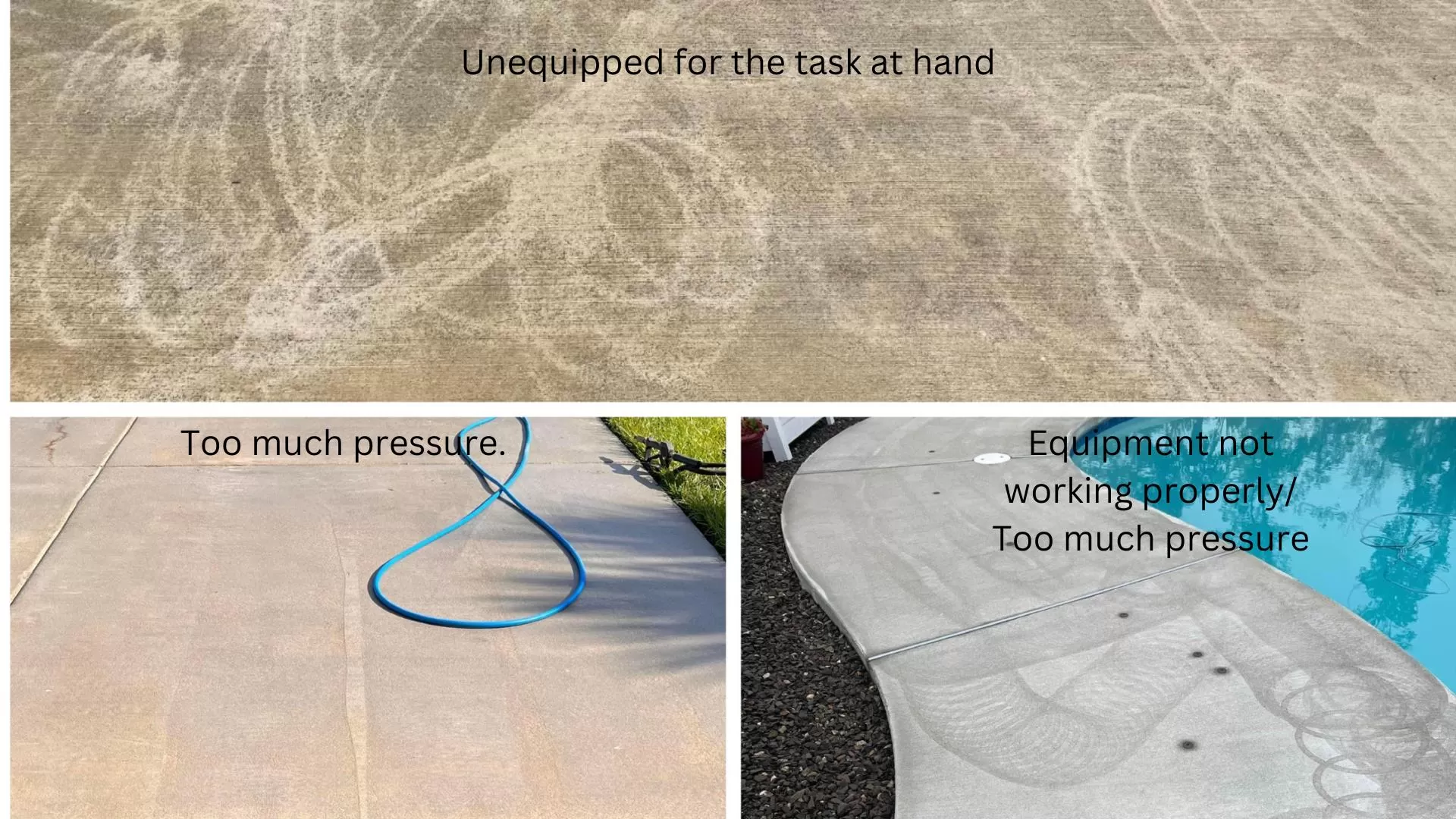
We clean driveways after failed DIY attempts more often than you'd expect. In most cases, the homeowner made the job harder: the wand work left visible zebra striping across the concrete, too much pressure in one spot caused surface etching that can't be undone, or the lack of pre-treatment meant the algae was knocked off the surface but the roots were left behind — leading to rapid regrowth within weeks.
Common Issues After DIY Pressure Washing:
- Zebra striping from wand-only cleaning without a surface cleaner attachment
- Etched or pitted concrete from holding a narrow nozzle too close to the surface
- Missed stains because there was no chemical pre-treatment to break down organic growth
- Uneven results around edges, expansion joints, and textured sections
- Faster regrowth of algae because the biological root wasn't treated — only the surface
- Accidental damage to landscaping from runoff of undiluted cleaning agents
Why Professional Surface Cleaning Consistently Wins
Professional surface cleaning uses commercial-grade rotating surface cleaners that maintain a consistent distance and pressure across the entire driveway slab. Unlike a wand, a surface cleaner eliminates the human variability that causes streaking — the spinning heads deliver uniform coverage in a controlled pattern. The result is a clean that looks even and intentional, not patchy.
We also apply a pre-treatment solution before any rinsing happens. That solution breaks down algae, mildew, and oil at a chemical level — loosening the bond between the stain and the concrete so the pressure wash removes it completely rather than just pushing it around. Pre-treatment is what separates a clean driveway from a surface that just looks lighter in photos.
We Adjust for What We Find
One of the practical advantages of professional service is experience-based judgment. When we see heavily stained areas, older concrete that needs lower pressure, or sections near landscaping that need protective coverage, we adjust our approach accordingly. DIY equipment typically offers limited adjustment, and most homeowners don't have the reference points to know when conditions call for a different technique.
If You Want It to Stay Clean, Seal It
The biggest upgrade most homeowners miss is the clean + seal combination. Cleaning restores the concrete's appearance. Sealing applies a protective barrier that reduces the porosity of the surface — making it harder for algae to root in, easier to clean next time, and more resistant to oil and staining. You don't just get a clean driveway; you get a driveway that stays cleaner longer.
For Mount Juliet homeowners dealing with shaded driveways, HOA standards, or upcoming listing season, the professional clean and seal combination is consistently the best investment per dollar in your home's exterior. The results are visible immediately — and they last.
Ready for Knockout Results?
Want a streak-free driveway the first time? Book a professional Mount Juliet driveway cleaning today.
Get a Free Quote