If you've searched for exterior cleaning services in Nashville or Mt. Juliet, you've seen both terms — soft washing and pressure washing. Many homeowners assume they're the same thing, just different words for pointing water at a dirty surface. They're not. Using the wrong method on the wrong surface can void warranties, crack caulk, strip paint, or force water behind your siding where it causes rot and mold. Knowing the difference before you book a service — or try to do it yourself — can save you a significant repair bill.
What Is Pressure Washing?
Pressure washing uses high-pressure water — typically 1,500 to 4,000 PSI — to blast dirt, grime, and staining off surfaces. The force of the water does most of the work. It's fast, visually satisfying, and highly effective on hard, durable surfaces like concrete driveways, brick patios, and stone pavers that can withstand the force without damage.
The key word is durable. Pressure washing is not appropriate for surfaces that can be damaged by high-pressure water — and that includes most house siding, painted wood, roof shingles, and older brick with aging mortar. A 3,000 PSI stream can strip paint off a deck, shatter vinyl siding, force water into wall cavities, and blast the granules off asphalt shingles, shortening your roof's life by years.
What Is Soft Washing?
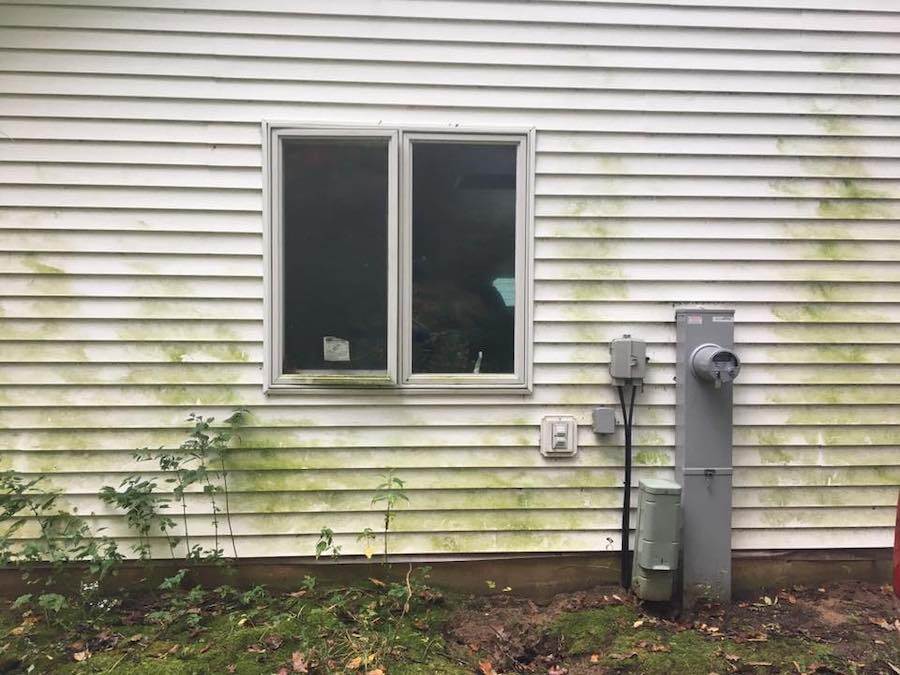
Soft washing uses low pressure — typically 50 to 500 PSI, about the same as a garden hose — combined with biodegradable cleaning solutions to kill and remove biological growth. Rather than relying on force, soft washing uses chemistry. The cleaning solution penetrates and kills the mold, algae, mildew, and bacteria at the root level, then the low-pressure rinse removes the dead organic matter.
This is critical for house washing, roof cleaning, and any surface with paint, wood, or aged materials. The Asphalt Roofing Manufacturers Association (ARMA) specifically recommends soft washing as the only safe method for cleaning asphalt shingle roofs. High pressure damages shingles and voids manufacturer warranties — soft washing does not.
Which Method Should You Use?
Use pressure washing for:
- Concrete driveways, sidewalks, and patios
- Brick pavers and natural stone hardscapes
- Pool decks and coping
- Commercial parking lots and concrete pads
- Dumpster pads and heavily soiled commercial surfaces
Use soft washing for:
- House siding — vinyl, fiber cement, Hardie board, stucco
- Asphalt shingle roofs
- Wood decks, fences, and pergolas
- Painted surfaces of any kind
- Screen enclosures and covered porches
- Older brick with aging mortar
Why Most Homes Need Both
A typical Middle Tennessee home needs both methods — soft washing for the house itself and the roof, and pressure washing for the driveway, walkway, and patio. A professional company will assess each surface and use the correct approach for each one. If a company tells you they'll 'pressure wash your whole house' with the same equipment they use on driveways, that's a red flag.
At Knockout Pressure Washing, we use soft washing on all house exteriors and roofs, and surface-cleaning equipment on concrete and hardscapes. The result is a complete exterior clean that's safe for every surface — and leaves your home looking better than a pressure washer alone ever could.
What About 'Power Washing'?
You'll also see the term power washing, and it adds to the confusion. Technically, power washing is pressure washing with heated water — useful for cutting grease on commercial surfaces like dumpster pads and drive-thrus. In residential marketing, though, the three terms get used interchangeably, which is exactly why you should ask any company what method they'll use on each specific surface rather than relying on the label.
The Numbers at a Glance
Pressure levels compared:
- Garden hose: roughly 40–60 PSI — the baseline
- Soft washing: 50–500 PSI — chemistry does the cleaning, water just delivers and rinses
- Consumer pressure washer: 1,500–2,000 PSI — enough to damage siding, paint, and wood
- Professional pressure washing: 3,500–4,000 PSI at 4+ GPM — reserved for concrete, brick, and stone
- Asphalt shingle damage threshold: well below 1,000 PSI — which is why roofs are soft wash only
Does Soft Washing Cost More?
For most homes the price difference is minor, because cost is driven more by surface area and buildup than by method. What does differ is how long the result lasts. Because soft washing kills mold, algae, and mildew at the root instead of blasting the visible layer off, a soft-washed house typically stays clean for 12 to 18 months in Middle Tennessee. A high-pressure rinse leaves the organisms alive in the siding texture, and the staining often reappears within a few months — making the cheap option the one you pay for twice.
The Damage We Get Called to Look At
Every season we walk properties where the wrong method was used before we arrived: permanent wand stripes etched into concrete from holding a turbo nozzle too close, asphalt shingles with the granules blasted off in arcs, vinyl siding with water stains bleeding from behind the panels, and deck boards furred up like a paintbrush from high pressure raising the wood grain. Most of this damage is irreversible — concrete etching and shingle granule loss cannot be cleaned away. That repair bill is the real cost of getting the method wrong.
Red Flags When Hiring
Walk away if you hear any of these:
- 'We pressure wash everything' — one method for every surface guarantees the wrong method on some of them
- No mention of cleaning solutions — water alone, at any pressure, does not kill biological growth
- They'll put high pressure on your roof — that violates shingle manufacturer guidance, full stop
- No insurance certificate available — you are absorbing their risk
- Price far below every other quote — chemistry, equipment, and insurance cost money; something is missing
The short version: pressure washing for concrete and stone, soft washing for everything that lives, breathes, or holds paint. A company that knows the difference — and can explain which it will use where on your property — is the one to hire.
Ready for Knockout Results?
Not sure which method your home needs? Get a free estimate and we'll walk you through exactly what we'd use — and why.
Get a Free Quote